

Magnetic Charging: Power and Convenience Unlocked
Rushing from airport lounges to city cafés, many Canadian and American travellers know the frustration of tangled cables and unreliable charging points. Staying powered up on the move matters more than ever as busy schedules and tight connections leave little room for slow or cumbersome tech. Understanding the principles behind magnetic charging and how it simplifies powering Apple devices can help you choose smarter, more convenient solutions for life on the go.
Table of Contents
- What Is Magnetic Charging And Its Principles
- Types Of Magnetic Charging Technologies
- How Magnetic Alignment Enhances Efficiency
- Practical Benefits For Apple And Travel Devices
- Risks, Limitations, And Common Misconceptions
- Comparing Magnetic Charging To Traditional Methods
Key Takeaways
| Point | Details |
|---|---|
| Advancement of Magnetic Charging | Magnetic charging represents a significant shift from traditional wired connections, allowing for more convenient and efficient power transfer. |
| Types of Technologies | Different magnetic charging technologies cater to varying device requirements, including inductive and magnetic resonance coupling. |
| Importance of Alignment | Precise magnetic alignment is crucial for optimising energy transfer efficiency, potentially increasing it by up to 40%. |
| Benefits for Travellers | Magnetic charging solutions, such as those from Apple, offer convenience, reduced wear on ports, and compatibility with various accessories, ideal for modern travellers. |
What Is Magnetic Charging and Its Principles
Magnetic charging represents a groundbreaking wireless power transfer technology that eliminates traditional cable connections, offering unprecedented convenience for modern electronic devices. At its core, this innovative approach leverages fundamental principles of electromagnetic energy transmission to deliver power efficiently and seamlessly.
The fundamental mechanism of magnetic charging relies on electromagnetic induction principles, where electrical energy is transferred wirelessly through magnetic fields. This sophisticated process involves two key components: a transmitting coil that generates a magnetic field and a receiving coil designed to capture and convert that electromagnetic energy into electrical current.
Key characteristics of magnetic charging include:
- Wireless Power Transfer: Enables charging without physical cable connections
- Electromagnetic Resonance: Uses precisely tuned magnetic fields for efficient energy transmission
- Contactless Technology: Reduces wear and tear on device charging ports
- Alignment Flexibility: Allows charging across small physical distances
The technology operates through several critical mechanisms:
- Generation of alternating magnetic field by transmitter coil
- Magnetic field inducement of electrical current in receiver coil
- Conversion of induced magnetic energy into device charging power
Magnetic coupling systems transform how we think about powering electronic devices, offering a glimpse into a future where charging becomes as simple as proximity. Unlike traditional wired charging, magnetic charging creates an electromagnetic bridge that can transmit power across small air gaps with remarkable efficiency.
Pro tip: Position your magnetic charging device carefully to maximise power transfer efficiency and minimise energy loss.
Types of Magnetic Charging Technologies
Magnetic charging technologies have evolved significantly, offering diverse approaches to wireless power transfer that cater to different device requirements and environmental constraints. Wireless power transfer systems represent a sophisticated technological landscape with multiple innovative methodologies designed to address various charging challenges.
The primary types of magnetic charging technologies include:
- Inductive Coupling: The most traditional magnetic charging method
- Magnetic Resonance Coupling: Enables longer-distance power transmission
- Dynamic Wireless Charging: Allows power transfer during device movement
- Multi-Coil Systems: Provides enhanced alignment and charging flexibility
Each technology operates through unique mechanisms:
-
Inductive Coupling
- Uses closely positioned transmitter and receiver coils
- Shortest effective charging distance
- Highest energy efficiency
-
Magnetic Resonance Coupling
- Permits broader spatial charging range
- Tolerates greater misalignment between coils
- Suitable for multiple device charging
-
Dynamic Wireless Charging
- Enables charging while devices are in motion
- Critical for electric vehicles and mobile technologies
- Requires sophisticated tracking and power management systems
These technologies fundamentally transform how we conceptualise power transfer, moving beyond traditional wired charging paradigms. Magnetic materials and coil configurations play a crucial role in determining the efficiency and practical applicability of each charging approach.
To help clarify the strengths and limitations of different magnetic charging technologies, see the below summary table:
| Technology Type | Ideal Use Case | Main Advantage | Limitation |
|---|---|---|---|
| Inductive Coupling | Close-range personal devices | Maximises energy efficiency | Limited spatial flexibility |
| Magnetic Resonance Coupling | Multi-device charging hubs | Supports flexible alignment | More complex design requirements |
| Dynamic Wireless Charging | Electric vehicles, transit | Enables charging in motion | Requires advanced coil tracking |
| Multi-Coil Systems | Home and office docks | Extends alignment range | Higher manufacturing costs |
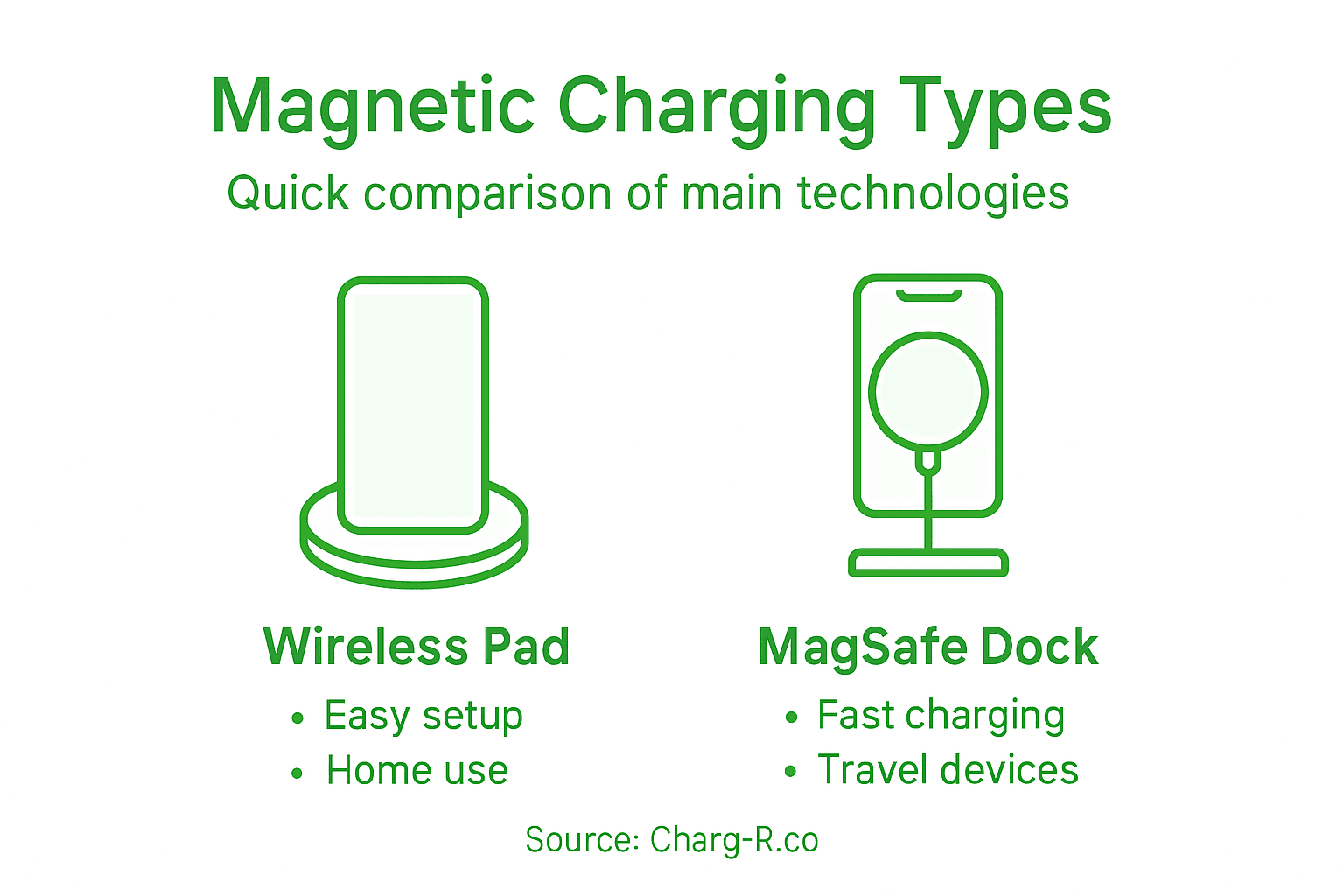
Pro tip: Choose magnetic charging technologies based on your specific device requirements and expected charging environment.
How Magnetic Alignment Enhances Efficiency
Magnetic alignment represents a critical factor in optimising wireless charging performance, directly influencing the energy transfer efficiency between transmission and receiving coils. Magnetic coupler design demonstrates how precise positioning can dramatically improve power transmission capabilities across various technological applications.
The key elements of magnetic alignment that enhance charging efficiency include:
- Spatial Proximity: Minimising distance between charging coils
- Angular Orientation: Maintaining optimal perpendicular positioning
- Electromagnetic Resonance: Synchronising frequency between transmitter and receiver
- Signal Coherence: Reducing electromagnetic interference
Precision in magnetic alignment involves several critical mechanisms:
-
Positional Calibration
- Reduces energy dissipation
- Maximises power transfer effectiveness
- Minimises heat generation
-
Coil Configuration
- Optimises magnetic field symmetry
- Enhances electromagnetic coupling
- Improves overall charging stability
-
Signal Synchronisation
- Matches transmission and receiving frequencies
- Eliminates power transfer inefficiencies
- Creates seamless energy transmission
Precise magnetic alignment can increase wireless charging efficiency by up to 40% compared to misaligned configurations.
Interestingly, magnetic navigation principles from biological systems reveal fascinating parallels with technological magnetic alignment, suggesting that orientation plays a fundamental role in efficient energy transfer across different domains.

Pro tip: Invest in charging systems with built-in alignment indicators to maximise power transfer efficiency.
Practical Benefits for Apple and Travel Devices
Magnetic charging technologies have revolutionised power solutions for modern travellers, particularly those with Apple devices. MagSafe technology introduces a groundbreaking approach to wireless charging, delivering unprecedented convenience and efficiency for tech-savvy professionals on the move.
Key advantages for Apple and travel devices include:
- Precise Alignment: Magnetic connections ensure perfect charging positioning
- Reduced Port Wear: Minimises physical connector damage
- Faster Charging Speeds: Enables up to 25-watt power transfer
- Accessory Compatibility: Supports diverse magnetic attachment ecosystems
Practical benefits manifest across multiple dimensions:
-
Travel Convenience
- Lightweight and compact charging solutions
- Eliminates tangled cable management
- Supports multiple device types
-
Device Protection
- Prevents accidental cable disconnections
- Reduces mechanical stress on device ports
- Enables secure magnetic accessory attachments
-
Performance Optimization
- Maintains consistent power transfer
- Minimises energy transmission losses
- Supports rapid charging protocols
Magnetic charging can reduce device port wear by up to 70% compared to traditional cable connections.
Magnetic charging solutions demonstrate remarkable versatility across home, office, and travel environments, transforming how professionals manage their electronic devices.
Pro tip: Invest in multi-device magnetic charging platforms to streamline your travel tech ecosystem.
Risks, Limitations, and Common Misconceptions
Magnetic charging technologies, while innovative, are not without potential challenges and misunderstandings. Battery charging myths persist, requiring careful examination of actual performance and potential limitations.
Common misconceptions about magnetic charging include:
- Battery Degradation: Unfounded fears about accelerated battery wear
- Heat Generation: Potential concerns about temperature management
- Efficiency Doubts: Misconceptions about power transfer effectiveness
- Device Compatibility: Limitations across different device ecosystems
Key risks and limitations to consider:
-
Thermal Management
- Potential for increased heat generation
- Requires high-quality charging components
- Demands careful device placement
-
Performance Variability
- Charging speed depends on alignment precision
- Potential signal interference issues
- Sensitivity to environmental factors
-
Cost Considerations
- Higher initial investment
- Specialised accessory requirements
- Potential compatibility restrictions
Empirical evidence suggests magnetic charging does not significantly compromise battery longevity when used correctly.
MagSafe charging performance demonstrates that technological advancements have addressed many early concerns about wireless charging reliability.
Pro tip: Always use certified magnetic chargers and maintain proper device positioning to minimise potential charging inefficiencies.
Comparing Magnetic Charging to Traditional Methods
The evolution of charging technologies presents a compelling narrative of innovation and efficiency. Wireless power transfer methods demonstrate significant advancements over conventional wired charging approaches, fundamentally transforming how we conceptualise power transmission.
Key comparative aspects between magnetic and traditional charging include:
- Connectivity: Magnetic charging eliminates physical cable connections
- Wear and Tear: Reduced mechanical stress on device ports
- Flexibility: Greater positioning and alignment options
- User Experience: More convenient and streamlined charging process
Detailed comparison across critical dimensions:
-
Charging Speed
- Traditional: Direct, consistent power transfer
- Magnetic: Potentially variable based on alignment
- Performance depends on technological implementation
-
Energy Efficiency
- Traditional: Minimal energy loss through direct connection
- Magnetic: Some energy dissipation during wireless transmission
- Technological improvements continually reducing efficiency gaps
-
Device Compatibility
- Traditional: Universal cable standards
- Magnetic: Increasingly standardised but still developing
- Requires specific device and accessory support
Magnetic charging represents a paradigm shift in power transmission technology, offering unprecedented convenience and flexibility.
Electric vehicle charging technologies illustrate the broader potential of wireless power transfer across diverse technological domains.
For a clear perspective on how wireless and traditional charging differ, consider the following comparison:
| Aspect | Magnetic Charging | Wired Charging | Hybrid Solutions |
|---|---|---|---|
| Port Durability | Minimal wear and tear | Prone to physical damage | Moderate protection |
| Charging Routine | Place device near coil | Plug in cable | Automatic switch detection |
| Environmental Impact | Reduces e-waste from cables | Generates cable waste | Balanced reduction |
Pro tip: Select magnetic charging solutions compatible with multiple device types to maximise versatility and convenience.
Discover Effortless Power with Magnetic Charging Solutions
The article highlights challenges such as aligning devices precisely for optimal magnetic charging efficiency and protecting device ports from wear and tear. If you value convenience, fast charging speeds, and portable power solutions that cater especially to Apple and travel devices, Charg-R.co offers a range of high-quality wireless chargers, sleek power banks, and travel-friendly accessories designed to address these exact concerns. Say goodbye to tangled cables and fragile connectors while enjoying reliable, contactless charging that matches your lifestyle.
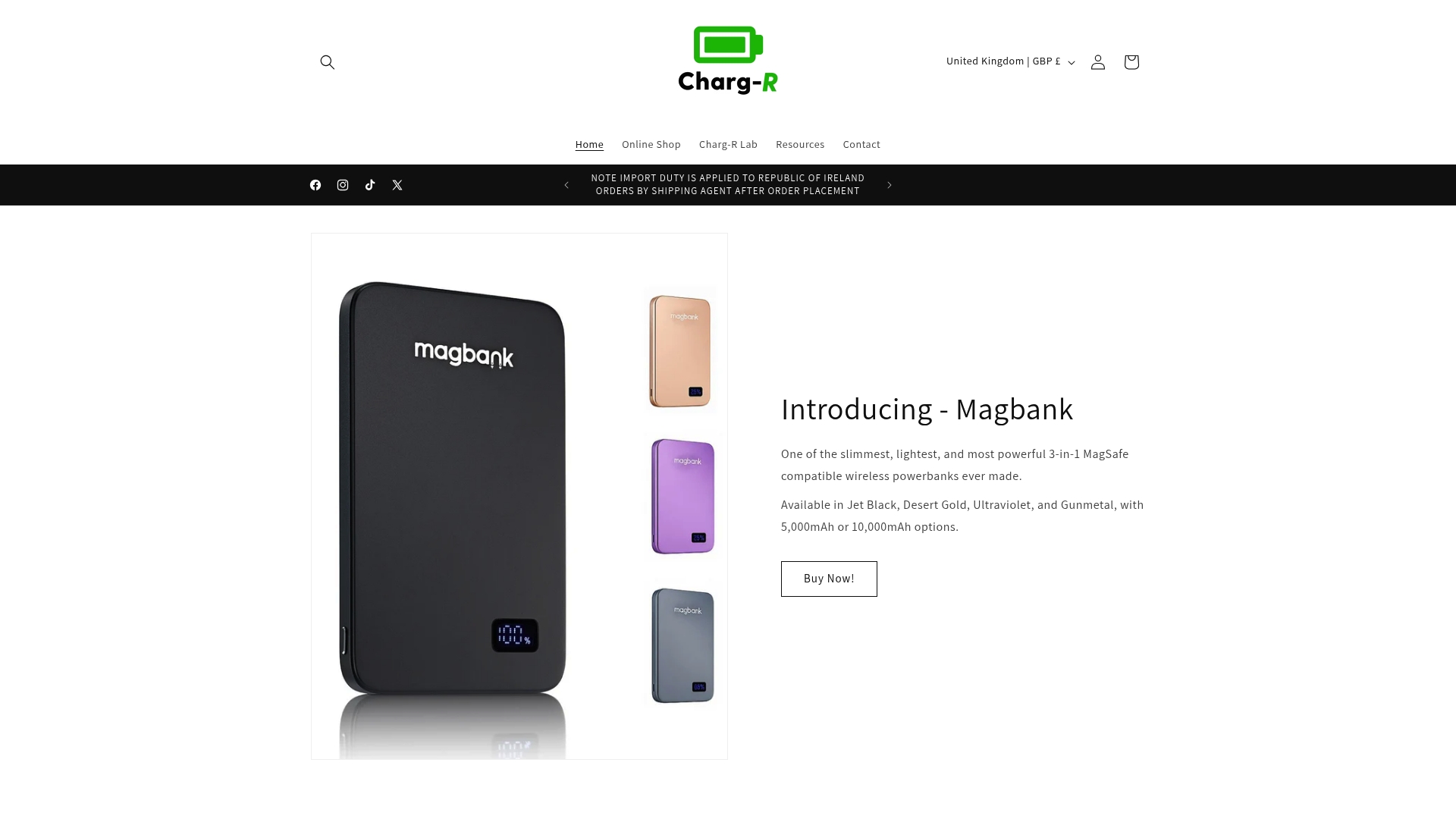
Experience next-level charging with Charg-R.co where cutting-edge magnetic charging technology meets practical design. Explore our selection of multifunctional devices that support precise magnetic alignment and enhance your device’s longevity. Don’t wait to upgrade your travel tech setup and enjoy faster, safer charging today. Visit our site and power up smarter with Charg-R.co. Looking for the perfect wireless charging partner? Check out our collection now at Charg-R.co and feel the convenience for yourself.
Frequently Asked Questions
What is magnetic charging and how does it work?
Magnetic charging is a wireless power transfer technology that uses electromagnetic induction to charge devices without physical cables. It involves a transmitting coil that generates a magnetic field and a receiving coil that captures this energy, converting it into electrical current for device charging.
What are the advantages of using magnetic charging?
Magnetic charging offers several benefits, including wireless power transfer, reduced wear on charging ports, alignment flexibility, and the convenience of not having to plug in cables. It also supports faster charging speeds and can help prevent physical damage to device connectors.
How does magnetic alignment affect charging efficiency?
Magnetic alignment plays a crucial role in optimising charging efficiency. Precise positioning, optimal angular orientation, and electromagnetic resonance can significantly enhance energy transfer, allowing for more efficient charging and minimising power loss.
What are the different types of magnetic charging technologies available?
The main types of magnetic charging technologies include inductive coupling, magnetic resonance coupling, dynamic wireless charging, and multi-coil systems. Each type caters to specific use cases, such as close-range charging, flexibility for multiple devices, and charging while in motion.